Why "I'm Just Not a Math Person" Isn't True (And How Tutoring Proves It)
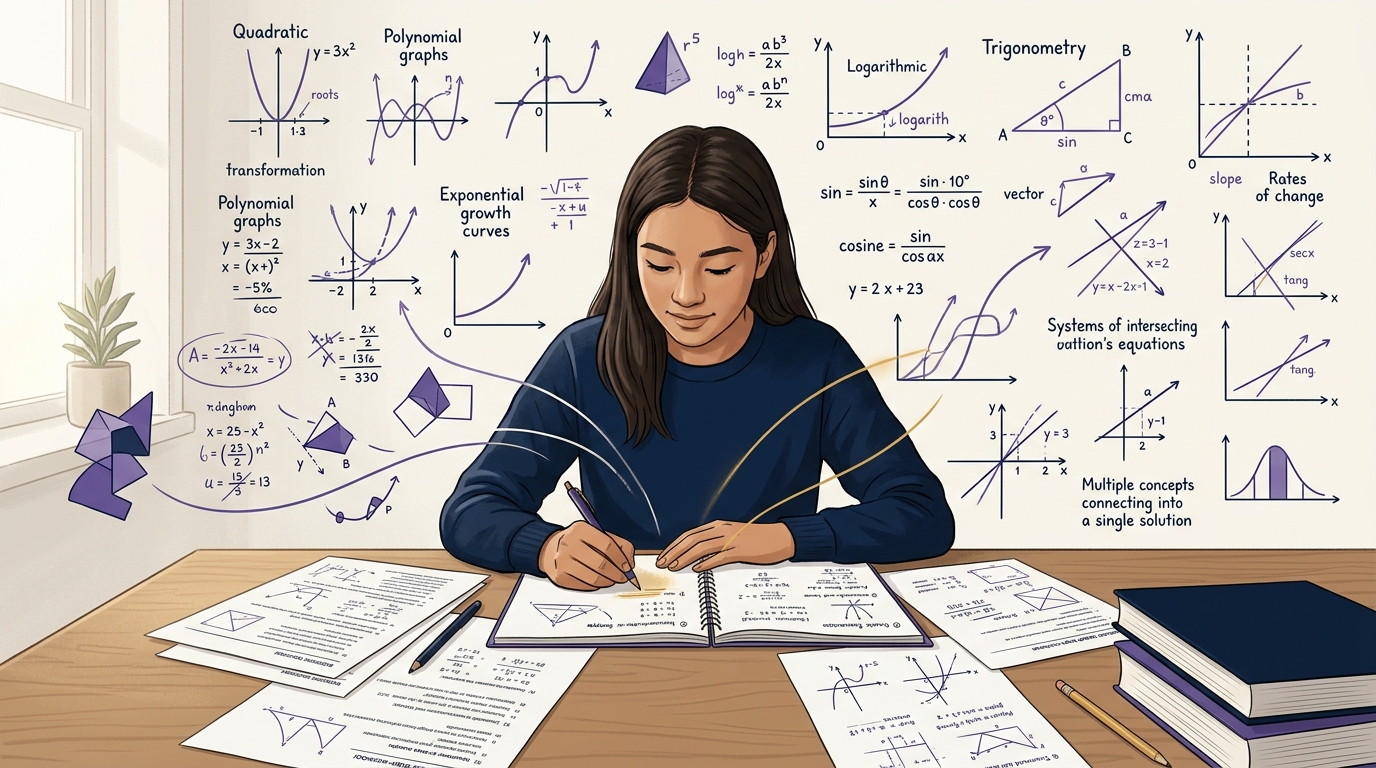
At some point, almost every struggling math student says a version of the same sentence: "I'm just not a math person." It's a tidy explanation, and it lets everyone off the hook — the student stops trying as hard, and the frustration finally has a name. The problem is that it's not true, and believing it tends to make things worse, not better.
Where the idea comes from
Math is one of the only school subjects where being wrong is immediate and visible — there's no partial credit for a beautifully argued wrong answer the way there might be in English. That instant, binary feedback makes math feel like a talent test instead of a skill you build. Add in one bad unit, one confusing teacher, or one missed foundational concept, and it's easy for a student to generalize a single rough patch into "I can't do math" as a permanent identity instead of a fixable gap.
What actually changes when a student "gets" math
Almost every case of a student "suddenly" understanding math isn't sudden at all — it's a missing piece finally getting filled in. Math builds in layers: you can't solve a two-step algebra problem confidently if you're still shaky on basic fraction operations, no matter how many hours you spend on the algebra itself. One-on-one tutoring works because it can actually find that missing layer instead of pushing forward at the pace of a 25-student classroom that has no choice but to move on.
MTH1W and the end of the academic/applied split
Ontario's own curriculum reflects this shift in thinking. Grade 9 math used to split students into "Academic" and "Applied" streams early — a structure that, in practice, often locked in a story about who was and wasn't "a math person" before high school had really started. MTH1W, the destreamed Grade 9 course, replaced that split with a single course for everyone, covering number sense, algebra, and financial literacy at one unified level. The policy change itself is a quiet admission that math ability isn't something you can sort a 14-year-old into a lane for.
From Gauss to Euclid: watching confidence compound
One of the clearest places to see the "math person" myth fall apart is in the CEMC contest track — Gauss in Grades 7-8, up through Pascal, Cayley, Fermat, and Euclid in senior grades. Students who write these contests aren't a separate species of naturally gifted kids; they're students who built pattern recognition and problem-solving stamina one level at a time, the same way anyone builds a skill. Watching a student who once dreaded fractions eventually tackle a contest problem for fun is the single best rebuttal to "I'm not a math person" there is.
What this looks like in a tutoring session
Effective math tutoring isn't about re-explaining the same lesson louder. It starts with finding exactly where the chain of understanding broke — a specific gap from two grades ago, not a vague sense of "math in general" — and rebuilding from there at the student's own pace, with immediate feedback on every step. Students who go through this process don't usually end up loving math overnight. But they stop believing it's something happening to them, and start treating it as something they can actually do — which is the real shift that makes the marks follow.

Ready to See This Work for Your Child?
Take our 30-second quiz — no commitment, just a quick way to find the right fit.