Why Two Teachers Can Grade the Same Essay Differently (And What to Do About It)
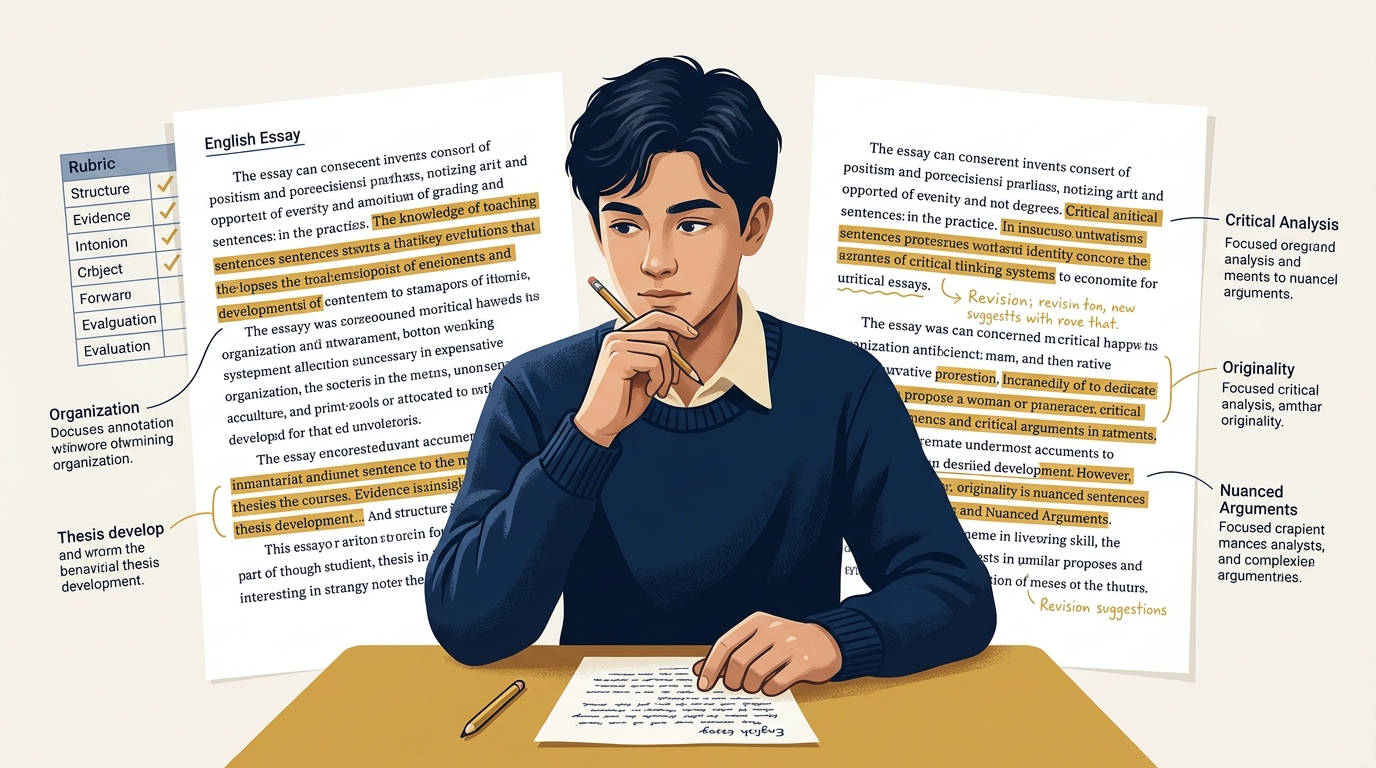
It's one of the most common moments of confusion for a parent: your child gets a B+ on an essay from one teacher, then a similar piece of writing comes back a full letter grade lower from someone else. It's tempting to conclude the grading is arbitrary, or that this year's teacher is just tougher. Neither is quite right. English grading is genuinely more subjective than a math test, but that doesn't mean it's random — it means the rubric is doing more interpretive work, and most students have never actually been shown how to read one.
Subjective doesn't mean arbitrary
A math test has one right answer. An essay rubric asks a human marker to weigh things like "clarity of argument," "use of evidence," and "sophistication of analysis" — categories where two reasonable, competent teachers can genuinely land in different places on the same piece of writing. That's a real source of inconsistency, and it's worth naming rather than pretending it doesn't exist. But within any single rubric, the categories are still real, gradable things — a marker isn't picking a number out of the air. The inconsistency lives in how much weight different markers put on each category, not in whether the categories themselves mean anything.
What a rubric is actually rewarding
Most students have read the assignment prompt closely and the rubric barely at all — understandable, since rubrics are usually written in dense, formal language that doesn't obviously translate into "what do I actually change in my next draft." But a rubric is the single most useful document a student has access to before they hand in an essay: it's the marker showing their work in advance. Reading it line by line and translating each category into a plain-language question — "does my thesis take a clear position, or just describe the topic?", "did I explain why my evidence supports my point, or just drop a quote in?" — turns a vague mark into a checklist a student can actually act on.
Why generic essay help doesn't close the gap
A lot of essay support amounts to a template: here's how to structure an introduction, here's a sentence starter for your thesis. Templates aren't useless, but they cap out fast, because they're the same for every student regardless of what that student's actual writing is doing well or poorly. A student who already writes a clear thesis but struggles to develop evidence needs different feedback than one who has strong ideas but disorganized paragraphs — a generic template treats both the same way. The more useful version of help is feedback on the student's own draft, specific to what that draft is actually doing.
What to look for besides the grade
One habit worth building at home: ask to see the marker's comments, not just the grade at the top of the page. A grade is one number; the comments are the actual explanation of where marks were gained and lost, and they're usually far more specific than most students bother to read closely. If your child got a similar mark on two different essays but for different reasons — one for weak evidence, one for unclear structure — that's useful information a single letter grade hides completely.
Getting a second opinion
This is exactly where an outside read is useful — not to argue with a teacher's mark after the fact, but to read the next essay the way a marker will before it's handed in, and show a student in plain language which lines are earning marks and which aren't. Over a few essays, that turns into a student who can self-assess their own draft against a rubric without needing someone else to translate it for them — which is the actual skill that carries forward long after any one assignment is marked and forgotten.


Ready to See This Work for Your Child?
Take our 30-second quiz — no commitment, just a quick way to find the right fit.